


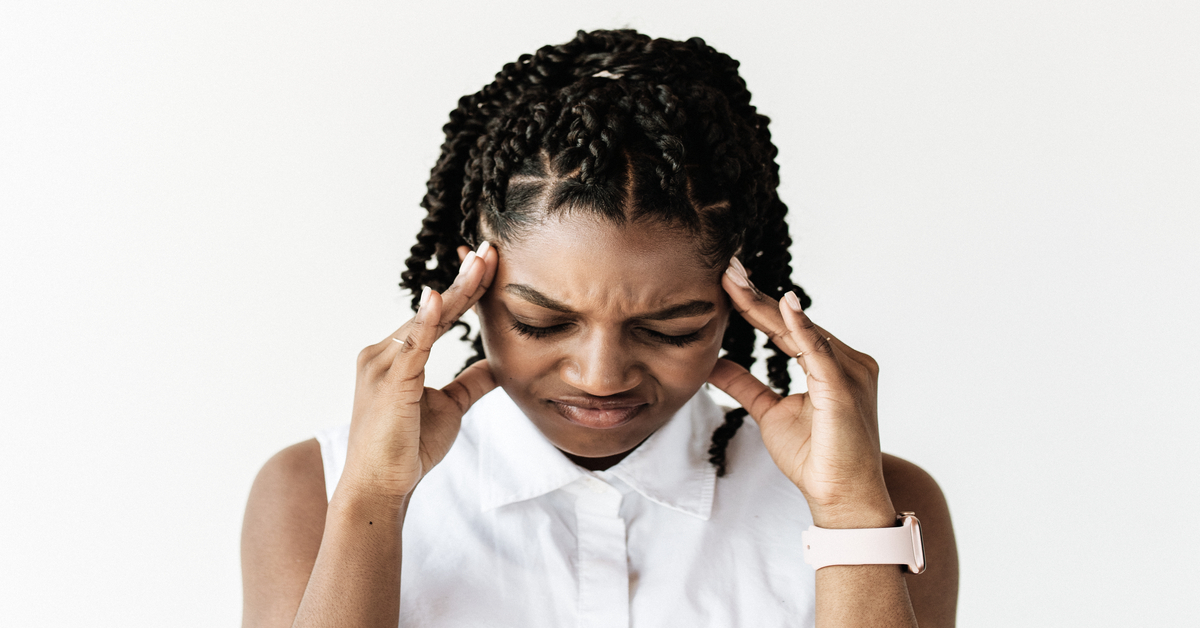
If you have spent most of your life being called scattered, emotional, or “too much,” and now in your 40s things feel even more out of control, you are not imagining it.
ADHD in women over 40 are real, documented, and far more common than most people know.
You might have spent decades coping. Color-coded planners. Phone alarms for everything. Apologizing constantly for being late or forgetting things. Maybe you were told it was anxiety. Or stress. Or just the pressure of doing too much.
But something shifted. And you cannot quite manage the way you used to.
Here is what most people do not know. Estrogen has a direct effect on how your brain manages attention and focus. As your hormones begin to change in your 40s, the coping strategies that held everything together for years can quietly stop working.
This article explains what is happening, why it happens when it does, and what you can do about it.

Why ADHD in Women Over 40 Is Often Missed
The American Psychiatric Association notes that ADHD in adults especially women is often overlooked because symptoms may appear differently than the classic childhood presentation.
The biggest reason is simple. For a long time, ADHD research was done almost entirely on young boys. The hyperactive child who could not sit still in class became the reference point. Doctors were trained to look for that picture.
Girls and women with ADHD often look completely different. They are quieter. More internalized. They daydream instead of disrupting. They hyper-focus intensely on things they love and fall apart on things they do not. Most importantly, they learn to mask. They compensate early and get very good at making everything appear fine from the outside.
So instead of receiving an adult ADHD diagnosis, they get told they have anxiety. Or depression. Or that they are just “sensitive.”
By the time many women reach their 40s, they have been misdiagnosed, treated for the wrong thing, or simply dismissed for years. Some are asking, for the very first time: could this be ADHD?
For many of them, the answer is yes.
ADHD and Perimenopause: How Estrogen Affects Focus, Memory, and Mood
This is the connection most people miss entirely.
Estrogen does not only affect your reproductive system. It plays a direct role in regulating dopamine, the neurotransmitter responsible for focus, motivation, and executive dysfunction. Dopamine controls your ability to plan, prioritize, start tasks, and follow through.
When estrogen is healthy and stable, dopamine works more efficiently. For a woman with attention deficit hyperactivity disorder, this does not eliminate the condition. But it helps the brain compensate. The gap between how her brain naturally functions and what daily life demands feels smaller and more manageable.
Here is the problem.
In your late 30s and into your 40s, the body enters perimenopause. Estrogen levels begin to fluctuate and eventually decline. For women with ADHD, diagnosed or not, this shift in estrogen and dopamine can feel like the floor falling out from under you.
The strategies that worked for twenty years stop working. Tasks that used to feel hard but manageable now feel impossible. Brain fog and ADHD symptoms overlap and blur together. Memory slips more often. Emotional regulation becomes harder. Some women describe it as suddenly becoming a completely different version of themselves.
It is not just stress. It is not weakness. It is biology. And it is treatable.
ADHD Symptoms in Women Over 40

ADHD in women over 40 do not always match what people expect. Here is what commonly shows up.
Executive dysfunction is one of the most consistent signs. This is trouble starting tasks, managing time, knowing where to begin, and following through even when you genuinely want to. It is not laziness. The brain is struggling to sequence and execute.
Chronic forgetfulness that goes beyond normal aging. Forgetting conversations from yesterday. Losing your keys every single day. Missing appointments you wrote down and meant to keep.
Emotional dysregulation. Moods that shift quickly. Intense frustration over small things. Feeling overwhelmed in situations others seem to navigate with ease. This is often where ADHD and anxiety in women overlap and become hard to separate. Both can be present at the same time. Without a proper evaluation, one gets treated while the other goes unaddressed.
Inconsistent focus. Many women with ADHD can hyper-focus for hours on something that engages them, completely losing track of time. Then struggle to concentrate for ten minutes on something that does not hold their attention. Both sides of this are part of the same condition.
Sleep problems. Racing thoughts at night. Difficulty winding down. Waking up exhausted even after a full night of sleep.
The challenge is that cognitive symptoms of perimenopause overlap almost perfectly with focus problems in women caused by ADHD. Hot flashes, mood changes, memory lapses, and concentration difficulties are symptoms of both. This is exactly why a professional evaluation matters so much. Without one, women are frequently treated for hormonal symptoms while the underlying ADHD continues unaddressed.
Adult ADHD Evaluation for Women Over 40
Many women hesitate to seek an evaluation because they do not know what to expect. Or because they are afraid, they will not be taken seriously, the way they have not been taken seriously before.
A proper psychiatric evaluation for ADHD in women over 40 is not a quick checklist. It is a thorough, structured conversation.
At Beaconview Psychiatry in Longmeadow, Massachusetts, the initial evaluation runs approximately 60 minutes. Dorcas Abimaje is a Board-Certified Psychiatric Mental Health Nurse Practitioner (PMHNP-BC) with over ten years of clinical experience. She looks at your full history, not just what you are feeling right now. How you functioned in school. How you have coped at different stages of your life. What has changed recently. What daily life actually feels like from the inside.
The goal is not to label you. It is to understand the complete picture so that the treatment plan fits your specific situation.
And if getting to Longmeadow is not always possible, the same evaluation is available through telehealth psychiatry in Massachusetts. Secure, private, and just as thorough as an in-person visit.
ADHD Medication Management for Women Over 40
Getting an adult ADHD diagnosis in women is the beginning. What happens next matters just as much.
ADHD medication management for women in their 40s and beyond is not a set-it-and-forget-it process. Hormonal fluctuations directly affect how psychiatric medications work. What is effective early in perimenopause may need careful adjustment as hormones continue to shift.
This is why follow-up appointments are not just a formality. They are an active, evolving part of your care. At Beaconview, follow-up visits track how well the medication is working, how sleep and mood are holding, and whether the dosage or timing needs to change as your body changes.
Some women also benefit from addressing both the ADHD and the hormonal component together, sometimes in coordination with their OB-GYN or primary care provider. A good psychiatric provider communicates across your care team when that is needed.
The goal is not just managing symptoms enough to get through the day. It is real, functional stability. Being able to think clearly, follow through, and show up the way you are fully capable of showing up.
When to Reach Out
If any part of this article felt like it was describing your life, that feeling matters.
You do not need to have been diagnosed as a child to receive ADHD testing and treatment as an adult. Many women are evaluated for the very first time in their 40s, 50s, and beyond. A late diagnosis is not a missed diagnosis. It is the beginning of finally understanding why things have always felt harder than they should.
You do not need to be in a crisis to ask for help. You just need to notice that something is not working the way you want it to, and decide you deserve better.
At Beaconview Psychiatry, Dorcas Abimaje works with women navigating exactly this. High-functioning ADHD, hormonal shifts, executive dysfunction, emotional dysregulation, and the quiet exhaustion of masking a condition nobody caught.
New patient appointments are typically available within one to two weeks. Most major insurance plans are accepted. Telehealth is available for anyone in Massachusetts, so distance is never a barrier to getting care.
The first step is simply reaching out. Schedule an appointment now!
Frequently Asked Questions About ADHD in Women
These are the questions women most commonly search before reaching out for an evaluation. Here are honest, clinical answers.
How is ADHD treated in women?
Treatment for ADHD in women treatment usually combines medication management, behavioral strategies, and in some cases therapy. Stimulant medications are the most commonly prescribed, but non-stimulant options exist too. Because estrogen directly affects how ADHD medications work, women often need their treatment plans adjusted during hormonal shifts like perimenopause or menopause. A qualified provider will build a plan specific to where you are right now, and revise it as your biology changes.
When does ADHD develop in females?
ADHD is a neurodevelopmental condition, meaning it begins in childhood. But in many girls, the symptoms go unrecognized for years because they present more quietly than in boys. Girls tend to internalize, compensate, and mask. So, while the condition was always there, the diagnosis often comes much later. Many women are not officially diagnosed until their 20s, 30s, or 40s, frequently after a life change such as a new job, pregnancy, or the hormonal disruption of perimenopause makes symptoms harder to manage. A late diagnosis is not a missed one. It is the beginning of finally understanding yourself clearly.
How do you manage ADHD without medication?
Some women manage ADHD symptoms without medication through structured daily routines, behavioral coaching, Cognitive Behavioral Therapy (CBT), consistent exercise, strong sleep hygiene, and external organizational systems. These strategies are genuinely helpful and can work well for mild presentations. However, for many women, especially those in perimenopause when the estrogen-dopamine connection adds another layer of difficulty, non-medication strategies alone may not be enough. The most honest approach is a full evaluation with a qualified provider who can help you weigh the options based on your real symptoms, not a general checklist.
What happens when ADHD goes untreated in adult women?
The consequences of untreated ADHD in female adults are real and cumulative. Chronic underperformance at work despite obvious intelligence. Relationship strain from forgetfulness and emotional dysregulation. Low self-esteem from decades of being told you are lazy or scattered. Higher rates of anxiety and depression. Financial instability from impulsive decisions or chronic disorganization. Many women internalize years of struggle as personal failure before anyone thinks to evaluate them for ADHD. Getting diagnosed and properly treated can change that picture significantly.
Is there an ADHD in women checklist I can use?
There is no single official ADHD in women checklist, but these are consistent signs that warrant a formal evaluation: frequent forgetfulness that affects daily life, chronic lateness despite trying, difficulty starting or completing tasks, intense emotional reactions to small frustrations, trouble sleeping because your mind will not quiet, a long pattern of feeling overwhelmed while others seem to cope fine, and a history of being diagnosed with anxiety or depression that never quite explained everything. If several of these feel familiar and persistent, a psychiatric evaluation is the right next step.
Can ADHD symptoms get worse during menopause?
Yes, and this is one of the most important things women with ADHD need to know. As estrogen declines during perimenopause and ADHD management become harder to separate, dopamine regulation becomes less stable. Women who were coping well with ADHD for years often find their existing strategies suddenly stop working during this stage. This is a documented, well-understood pattern. It is not a personal failure. It is a hormonal reality that requires updated psychiatric care, not just more willpower.
Can a PMHNP diagnose and treat ADHD in women?
Yes. A Board-Certified Psychiatric Mental Health Nurse Practitioner (PMHNP-BC) is fully qualified to evaluate, diagnose, and treat ADHD in adult women. This includes conducting comprehensive psychiatric evaluations, making a clinical diagnosis, and prescribing and managing ADHD medications. At Beaconview Psychiatry, Dorcas Abimaje, PMHNP-BC, has over ten years of experience doing exactly this, both in person in Longmeadow and via telehealth across Massachusetts. You do not need to see an MD psychiatrist to receive expert ADHD care.
Related Posts




Dorcas Abimaje, PMHNP-BC, is the founder of Beaconview Psychiatry in Longmeadow, MA. She is a Board-Certified Psychiatric Mental Health Nurse Practitioner with over 10 years of clinical experience in medication management for ADHD, anxiety, depression, PTSD, bipolar disorder, and postpartum depression.